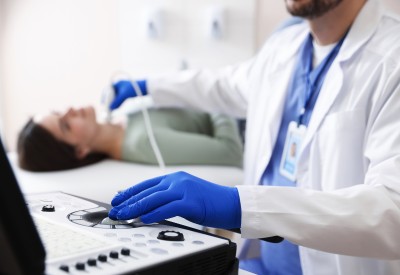
Patient Guide

Preliminary recommendations for your diagnostic tests and an accurate diagnosis.
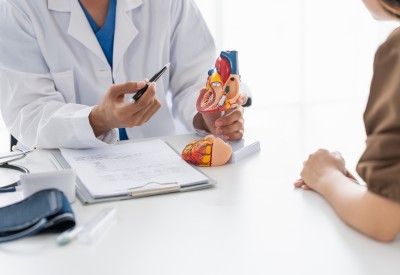
Consulta Cardiológica

HBPM (Home Blood Pressure Monitoring)

Electrocardiograma

Guidelines for the stress test (ergometry)

Holter de Ritmo home

Recommendations for Holter rhythm monitoring and ABPM

Revisión Cardiológica Deportiva home

Myocardial SPECT (stress/rest)

Ecocardiograma

Coronary CT scan

Prevención Cardiovascular home

Cardiac magnetic resonance imaging

Consulta Cardiológica General

AMPA, home voltage measurement

Take your blood pressure one week before your appointment. To take your blood pressure at home:

  • Be in a quiet, noise-free room.
  • Thirty minutes before taking the measurement, avoid: coffee, tobacco, alcohol, eating, and exercise.
  • Urinate before taking your blood pressure.
  • Sit back in a chair and do not cross your legs.
  • Remain at rest and in silence for 5 minutes.
  • Undress your reference arm and place the cuff on it. Make sure the sensor is positioned over the brachial artery. Rest your arm on the table with your palm facing up. Press the “start” button on the device.
  • While taking your blood pressure, do not move your arm or talk.
  • Repeat the procedure two more times, waiting one minute between each reading. Write down all three results.
  • It is necessary to take your blood pressure twice a day: in the morning before breakfast and without taking any medication, and in the evening before dinner. Blood pressure should be taken 7 days a week, morning and evening, at the same time each day.

Guidelines for the stress test or ergometry

Before undergoing a stress test on a stationary bike or treadmill, please consider the following:

You will be subjected to physical exertion with a progressive increase in resistance, according to each patient’s capabilities and performance. Therefore:
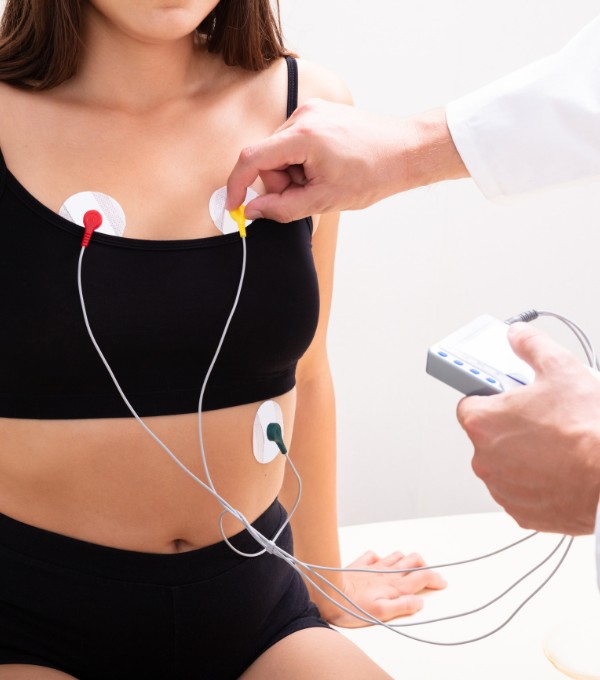
  • Please bring your weight and height written down. You should wear comfortable clothing and shoes. Men with abundant body hair should have their chest shaved.
  • You do not need to fast, and depending on your appointment time, you may eat light snacks one hour beforehand to avoid prolonged fasting. Only light snacks, such as soft drinks, juice, or milk, are permitted.
  • If you have joint problems, including knees, ankles, or hips, you cannot take the test. Please inform your doctor.
  • You cannot take the test if you have a physical or neurological disability.
  • If you were hospitalized for a heart attack or angina within the last 15 days, please inform your doctor.
  • If you have heart failure, please inform your doctor.
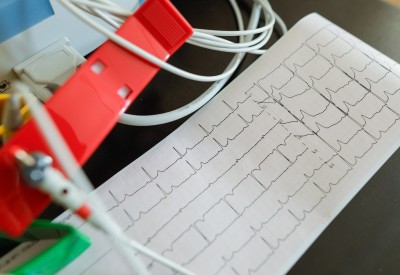
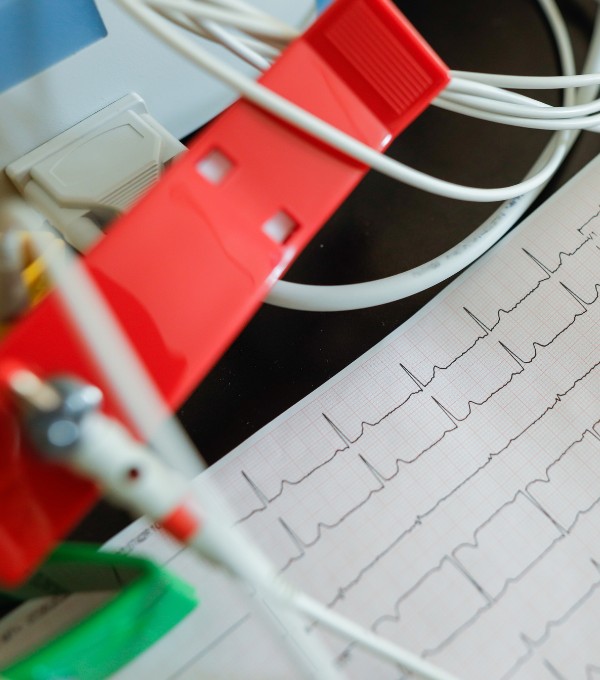
Electrocardiograma (ECG)
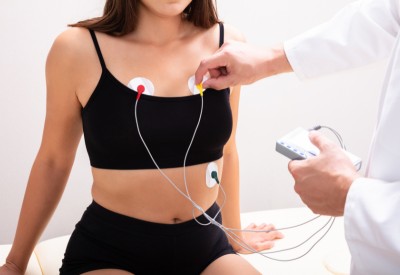
Holter de Ritmo

Recommendations for Holter rhythm and ABPM (ambulatory blood pressure monitoring) studies

Your study will last approximately 24 hours.

You will arrive at the scheduled time.

The equipment will be placed on you, and once fitted, you will take it home. You must return the following day at the same time to have the device removed.
You should wear a shirt or blouse, depending on your gender, with wide sleeves to allow placement of the cuff.

The device will automatically measure your blood pressure approximately every 30 minutes during the day and every 2 hours at night (this may vary depending on device programming). You should keep your arm relaxed while the measurement is being taken.

Holter Monitoring

Your study will last approximately 24 hours.

You will arrive at the scheduled time.

The equipment will be placed on you, and once fitted, you will take it home. You must return the following day at the same time to have the device removed.

Male patients should have a shaved chest.

You should arrive clean, without any cream or powder on your body.

Myocardial SPECT ESF/REST

Important: you must arrive 10 minutes before your appointment time, regardless of what is communicated by phone.

Cardiac nuclear medicine imaging evaluates the heart to identify coronary artery disease and cardiomyopathy (diseases of the heart muscle). It can also be used to determine whether the heart has been damaged by chemotherapy or radiotherapy. Nuclear medicine uses small amounts of radioactive materials called radiotracers, which are usually injected into the bloodstream. Nuclear medicine imaging provides unique information that generally cannot be obtained using other imaging procedures.

Please inform your doctor if there is any possibility that you are pregnant or if you are breastfeeding, and let them know about any recent illnesses, medical conditions, allergies, and medications you are taking. Depending on the type of examination, your doctor will provide instructions on what you can eat or drink beforehand, especially if sedation will be used. Leave jewelry at home and wear loose, comfortable clothing. You may be asked to wear a gown.

Important: the study may last 4 hours and, depending on body weight, it may be performed in 1 or 2 days. Your study will be carried out at SIMM, phone 932046439, located at Josep Irla i Bosch 5, 7 ground floor, Barcelona, relatively close to Hospital de Barcelona.

Fasting: You must fast for 4 hours prior to the study.

Restrictions:

  • Do not consume any food, beverages, or medications containing caffeine (coffee, tea and herbal infusions, carbonated drinks, energy drinks – Coca-Cola, Pepsi, Red Bull, Guarana, etc., and others: chocolate and all cocoa derivatives) for 72 hours prior to the test.
  • Do not use gastric protectors such as omeprazole, pantoprazole, or lansoprazole for 24 hours prior to the test.
  • Men with abundant body hair must arrive with a shaved chest.
  • Discontinue atenolol, Emconcor, bisoprolol, nebivolol, or carvedilol two days before the test. If you have any questions, consult your doctor.
  • The first part of the test may require cycling, so please wear comfortable clothing and shoes.
Revisión Cardiológica Deportiva
Ecocardiograma

Coronary CT

Referral: REQUEST APPOINTMENT at Creu Blanca Reina Elisenda

Coronary CT scan (or coronary CT angiography) is a non-invasive advanced diagnostic test that uses X-rays and iodinated contrast to create detailed three-dimensional images of the heart’s arteries, allowing the detection of atherosclerotic plaques (calcified or non-calcified) and obstructions.

Patient Preparation:

  • Fasting: A fast from solid and liquid foods is required for at least 6 to 8 hours before the test.
  • Caffeine and Tobacco: Avoid caffeine, theine, energy drinks, and do not smoke for at least 4 hours beforehand (or even 12 hours, depending on the protocol) to maintain a low heart rate.
  • Medication: Generally, you should continue with your usual medication unless your doctor advises otherwise (especially diabetic patients taking metformin).
  • Clothing: Wear comfortable clothing and avoid wearing metal on your torso.
  • Companion: It is recommended that you be accompanied, as mild sedatives are sometimes administered if the patient is very anxious.
  • During the Procedure
  • Contrast: Iodinated contrast is injected intravenously, which may cause a sensation of warmth and a metallic taste; these are normal reactions.
  • Heart Rate: It is crucial to have a low and stable heart rate (generally less than 60-65 beats per minute). Medication (beta-blockers) is often administered before the test to lower it. Apnea: The patient must hold their breath for a few seconds while the images are acquired.
  • Duration: The actual image acquisition time is very fast, often less than 15 seconds, although preparation and time in the operating room are longer.
  • Contraindications and Risks
  • Severe renal impairment: The contrast agent may affect kidney function.
  • Contrast allergy: Always inform the team of any previous allergies to iodine.
  • Pregnancy: Generally contraindicated due to radiation exposure.
  • Arrhythmias: Atrial fibrillation or irregular rhythms may compromise image quality.
  • Radiation: Although radiation exposure has decreased with newer equipment, this test emits radiation and must be well justified.
  • Post-procedure Recommendations
  • Hydration: It is recommended to drink plenty of water after the test to help eliminate the contrast agent from the body.

Cardiac magnetic resonance imaging

Cardiac magnetic resonance imaging (CMR) is a non-invasive, radiation-free technique that requires specific preparation: fasting from solid food for at least 4 hours, abstaining from caffeine and alcohol for 24 hours, and removing all metal objects. It is essential to inform the team about pacemakers, implants, or claustrophobia.

Patient Guidelines:
  • Fasting: Do not eat solid food for 4 hours beforehand, although you may drink water.
  • Restrictions: Avoid coffee, tea, yerba mate, energy drinks, and alcohol for 24 hours beforehand.
  • Metal Objects: Remove jewelry, piercings, glasses, hearing aids, and makeup.
  • Safety: Inform us about pacemakers, defibrillators, cochlear implants, brain clips, or shrapnel.
  • Claustrophobia: If you suffer from claustrophobia, please inform us beforehand so we can consider light sedation.
  • Contrast Agents: Gadolinium is used; it is safe for those with iodine allergies, but you must inform us of any previous allergies.
  • During the Test:
  • Duration: Generally between 45 and 60 minutes.
  • Technique: The scan is performed in a wide tunnel, where you must follow instructions to hold your breath for brief periods.
  • Sequences: These include cine-MRI (function), late gadolinium enhancement (fibrosis), and perfusion.
Prevención Cardiovascular

CONTACT US

Do you need a cardiology check-up?

Prevention is the best treatment. Schedule your appointment quickly and easily.