Patient Guide
Preliminary recommendations for your diagnostic tests and an accurate diagnosis.



AMPA, home voltage measurement
Take your blood pressure one week before your appointment. To take your blood pressure at home:
Guidelines for the stress test or ergometry
Before undergoing a stress test on a stationary bike or treadmill, please consider the following:
You will be subjected to physical exertion with a progressive increase in resistance, according to each patient’s capabilities and performance. Therefore:
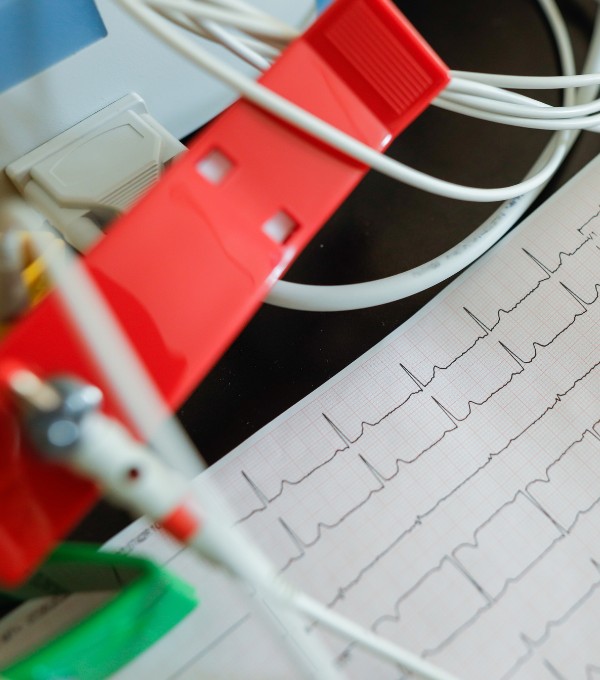
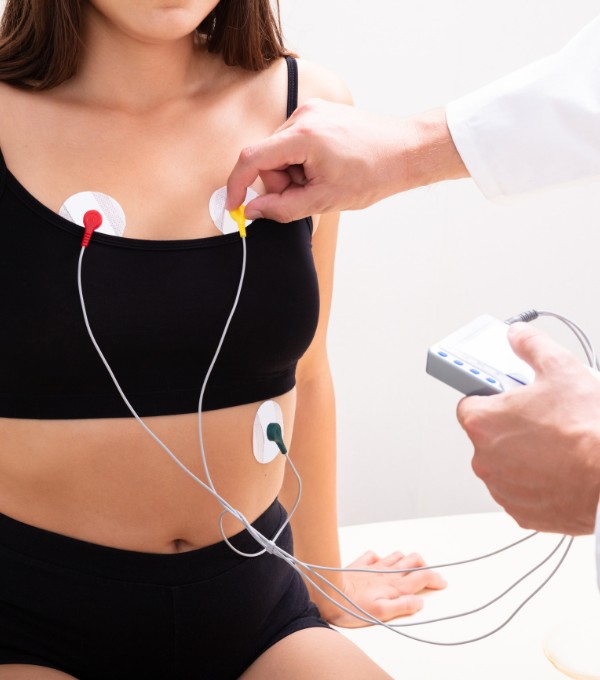
Recommendations for Holter rhythm and ABPM (ambulatory blood pressure monitoring) studies
Your study will last approximately 24 hours.
You will arrive at the scheduled time.
The equipment will be placed on you, and once fitted, you will take it home. You must return the following day at the same time to have the device removed.
You should wear a shirt or blouse, depending on your gender, with wide sleeves to allow placement of the cuff.
The device will automatically measure your blood pressure approximately every 30 minutes during the day and every 2 hours at night (this may vary depending on device programming). You should keep your arm relaxed while the measurement is being taken.
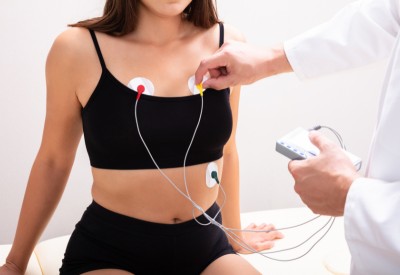
Holter Monitoring
Your study will last approximately 24 hours.
You will arrive at the scheduled time.
The equipment will be placed on you, and once fitted, you will take it home. You must return the following day at the same time to have the device removed.
Male patients should have a shaved chest.
You should arrive clean, without any cream or powder on your body.
Myocardial SPECT ESF/REST
Important: you must arrive 10 minutes before your appointment time, regardless of what is communicated by phone.
Cardiac nuclear medicine imaging evaluates the heart to identify coronary artery disease and cardiomyopathy (diseases of the heart muscle). It can also be used to determine whether the heart has been damaged by chemotherapy or radiotherapy. Nuclear medicine uses small amounts of radioactive materials called radiotracers, which are usually injected into the bloodstream. Nuclear medicine imaging provides unique information that generally cannot be obtained using other imaging procedures.
Please inform your doctor if there is any possibility that you are pregnant or if you are breastfeeding, and let them know about any recent illnesses, medical conditions, allergies, and medications you are taking. Depending on the type of examination, your doctor will provide instructions on what you can eat or drink beforehand, especially if sedation will be used. Leave jewelry at home and wear loose, comfortable clothing. You may be asked to wear a gown.
Important: the study may last 4 hours and, depending on body weight, it may be performed in 1 or 2 days. Your study will be carried out at SIMM, phone 932046439, located at Josep Irla i Bosch 5, 7 ground floor, Barcelona, relatively close to Hospital de Barcelona.
Fasting: You must fast for 4 hours prior to the study.
Restrictions:

Coronary CT
Referral: REQUEST APPOINTMENT at Creu Blanca Reina Elisenda
Coronary CT scan (or coronary CT angiography) is a non-invasive advanced diagnostic test that uses X-rays and iodinated contrast to create detailed three-dimensional images of the heart’s arteries, allowing the detection of atherosclerotic plaques (calcified or non-calcified) and obstructions.
Patient Preparation:
Cardiac magnetic resonance imaging
Cardiac magnetic resonance imaging (CMR) is a non-invasive, radiation-free technique that requires specific preparation: fasting from solid food for at least 4 hours, abstaining from caffeine and alcohol for 24 hours, and removing all metal objects. It is essential to inform the team about pacemakers, implants, or claustrophobia.
Patient Guidelines: